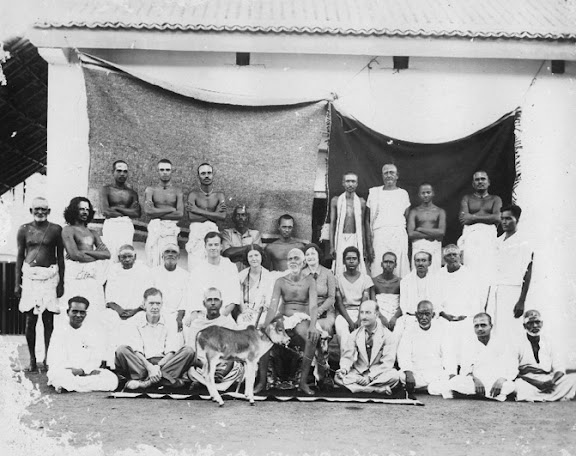
Talk 96.
Maj. A. W. Chadwick: Of what nature is the realisation of Westerners who relate that they have had flashes of cosmic consciousness?
Maharshi: It came as a flash and disappeared as such. That which has a beginning must also end. Only when the ever-present consciousness is realised will it be permanent. Consciousness is indeed always with us. Everyone knows `I am!' No one can deny his own being. The man in deep slumber is not aware; while awake he seems to be aware. But it is the same person. There is no change in the one who slept and the one who is now awake. In deep sleep he was not aware of his body; there was no body-consciousness. In the wakeful state he is aware of his body; there is body-consciousness. Therefore the difference lies in the emergence of body-consciousness and not in any change in the Real Consciousness. The body and body-consciousness arise together and sink together. All this amounts to saying that there are no limitations in deep sleep, whereas there are limitations in the waking state. These limitations are the bondage; the feeling `The body is I' is the error. This false sense of `I' must go. The real `I' is always there. It is here and now. It never appears anew and disappears again. That which is must also persist for ever. That which appears anew will also be lost. Compare deep sleep and waking. The body appears in one state but not in the other. Therefore the body will be lost. The consciousness was pre-existent and will survive the body. In fact, there is no one who does not say `I am'. The wrong knowledge of `I am the body' is the cause of all the mischief. This wrong knowledge must go. That is Realisation. Realisation is not acquisition of anything new nor it is a new faculty. It is only removal of all camouflage.
Maj. Chadwick: I try to shake off the body.
Maharshi: A man shakes off his clothes and remains alone and free. The Self is unlimited and is not confined to the body. How can the body be shaken off? Where will he leave it? Wherever it is, it is his still.
Maj. Chadwick: (Laughter.)
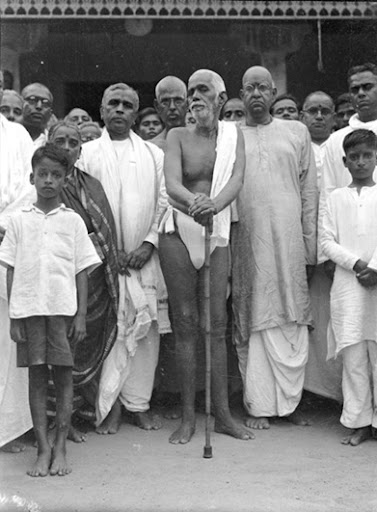
Maharshi: The ultimate Truth is so simple. It is nothing more than being in the pristine state. This is all that need be said. Still, it is a wonder that to teach this simple Truth there should come into being so many religions, creeds, methods and disputes among them and so on! Oh the pity! Oh the pity!
Maj. Chadwick: But people will not be content with simplicity; they want complexity.
Maharshi: Quite so. Because they want something elaborate and attractive and puzzling, so many religions have come into existence and each of them is so complex and each creed in each religion has its own adherents and antagonists. For example, an ordinary Christian will not be satisfied unless he is told that God is somewhere in the far-off Heavens not to be reached by us unaided. Christ alone knew Him and Christ alone can guide us. Worship Christ and be saved. If told the simple truth - "The Kingdom of Heaven is within you" - he is not satisfied and will read complex and far-fetched meanings in such statements. Mature minds alone can grasp the simple Truth in all its nakedness.
Maj. Chadwick later expressed a certain involuntary fear while meditating. He feels the spirit separated from the gross body and the sensation creates a fright.
Maharshi: To whom is the fright? It is all due to the habit of identifying the body with the Self. Repeated experience of separation will make one familiar and the fright will cease.
Talk 95 Talk 97